
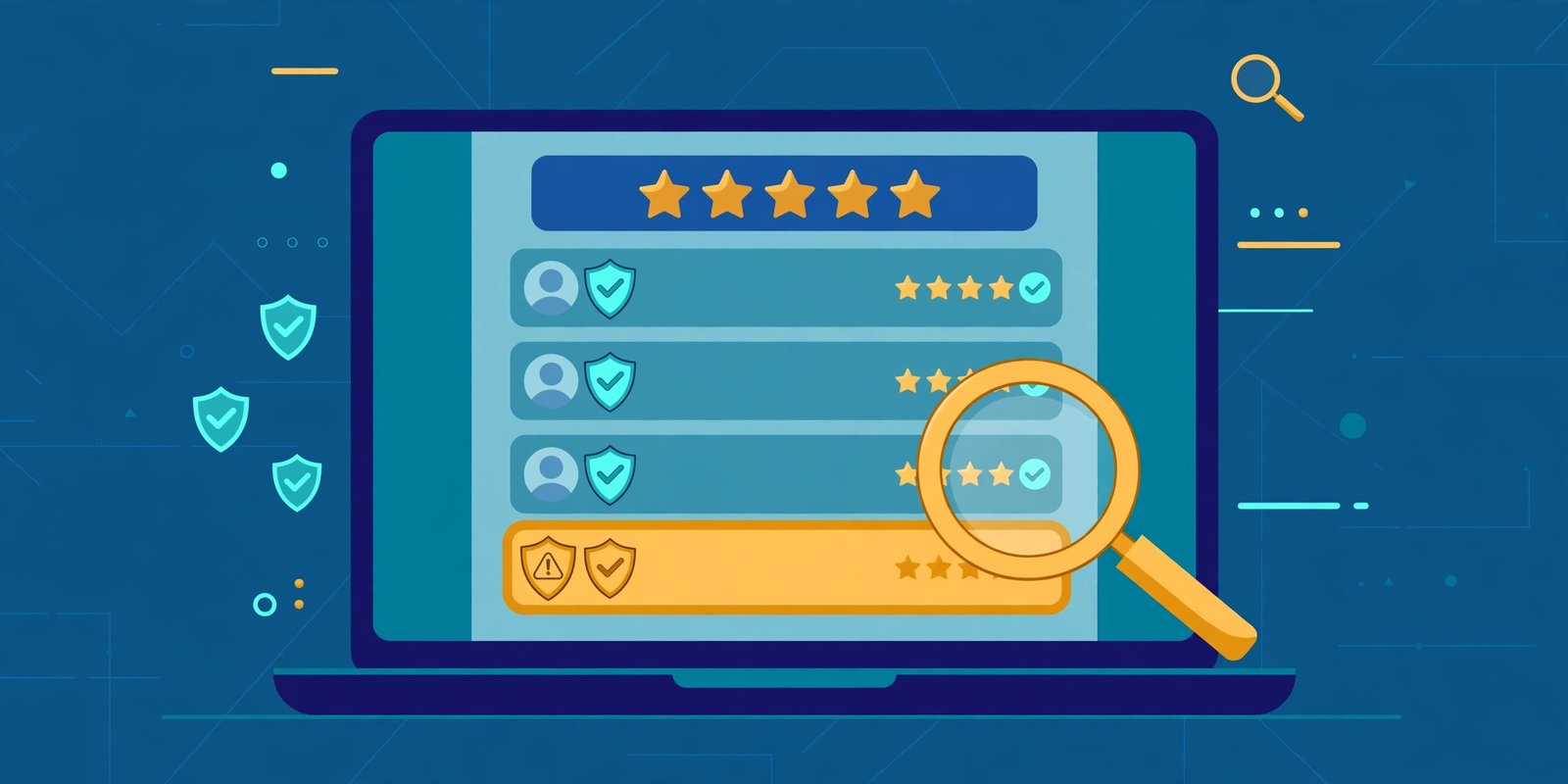
How to Spot Fake Online Reviews in the UK
Fake online reviews are still common, even though they are now illegal in the UK. A product can look perfect on paper, with hundreds of five star ratings, and still disappoint you when it arrives. The good news is that fake reviews leave clues. This guide shows you nine signs to check before you trust a review and spend your money.
What Is a Fake Review?
A fake review is a review that claims to come from a real customer experience when it does not. Some are written by the seller, some are bought from review farms, and some are written by rivals to damage a competing business. A review can also be fake if the writer was paid or given a free product and that incentive is hidden. Both glowing fake reviews and unfair fake negative reviews count. The point is simple: the review does not reflect a genuine experience.
Fake reviews matter because most shoppers read them before they buy. A product with a boosted rating can outsell an honest rival. A business hit by fake negative reviews can lose real customers. That is why the UK changed the law, and why learning to spot the signs is a useful everyday skill.
Why Fake Reviews Are Harder to Spot Now
Artificial intelligence has made fake reviews harder to catch. AI tools can write dozens of polished, natural sounding reviews in minutes. The old advice to look for bad grammar no longer works, because AI written reviews often read better than real ones.
That does not mean detection is impossible. It means the wording of a single review tells you less than it used to. The behaviour around the review tells you far more: when it was posted, who posted it, and how it fits the pattern of the other reviews. If you want to sharpen your eye for machine written text, read our guide on how to spot AI generated text. The same clues apply to reviews written by AI tools.
9 Signs a Review May Be Fake
1. A sudden burst of reviews
Real reviews usually arrive at a steady pace. Be suspicious when dozens appear within a few days, when several share the same date, or when a wave of praise arrives right after a bad review. Review bursts are one of the strongest signals regulators and platforms look for. Check the dates before you read the words.
2. Reviewer profiles that do not add up
Click the reviewer name where the platform allows it. A genuine reviewer usually has a history across different products or businesses. Warning signs include an account with only one review ever, an account that rates everything five stars, or an account that reviews businesses in three different countries in the same week. A reviewer who only ever praises one business is also worth a second look.
3. The same wording from different reviewers
Fake review writers reuse phrases. If several reviews use the same unusual wording, the same sentence structure, or the same odd spelling, they may come from one source. Copy a suspicious phrase into a search engine and see if it appears on other listings. Rings of reviewers who all review the same set of businesses are a classic pattern.
4. Lots of praise, very little detail
Genuine reviews usually mention something specific: the size, the delivery time, the battery life, the room, the staff member who helped. Fake reviews often stay vague and emotional, with phrases like “amazing product” or “best ever” and nothing concrete. Research has found that invented reviews tend to talk about the occasion and the reviewer, while real ones describe the product and the experience.
5. Details that do not match the business
Some fake reviews describe a product the shop does not sell, a branch that does not exist, or a service the business never offered. Others are clearly written about a different item and merged onto the wrong listing. If the details do not fit, trust the details, not the star rating.
6. Signs of an incentive
Watch for reviews that mention a gift card, a refund, or a free product in exchange for feedback. A reviewer may also say they were asked to change a negative review. Some platforms let you search reviews for words like “bribe” or “free gift”, which can reveal what is really going on. An incentivised review is not always fake, but it must be clearly labelled as incentivised. Hidden incentives are against the law.
7. A rating that jumps, then falls
Products that buy reviews often show a short rating boost. Once the buying stops, the rating falls and the share of one star reviews rises. A product page with a suspiciously perfect score and almost no middle ratings deserves a closer look. Real products almost always attract a mix of four, three and two star reviews alongside the praise.
8. A warning on the profile or listing
Platforms now flag suspicious activity. Trustpilot shows consumer warnings and can hide a business TrustScore. Google shows warning alerts on UK business profiles caught boosting ratings. Yelp shows consumer alerts too. Check the top of the profile before you scroll through the reviews, because a warning there is a direct signal from the platform itself.
9. No sign the reviewer bought the product
Verified purchase labels help. On Amazon and Trustpilot, a “verified” or “verified purchase” label means the platform has evidence the reviewer bought the item. Reviews without any verification are not automatically fake, but a page full of unverified five star praise is far weaker evidence than a page with verified reviews. In the EU, a site that shows reviews must say whether and how it checks that reviewers really used the product.
How to Check a Business Before You Buy
Use this quick routine before you order from a business you do not know.
First, ignore the five star reviews for a moment and read the four, three and two star reviews instead. They are usually more honest about quality, delivery and customer service. Second, sort the reviews by most recent, not by top rated. Fake reviews are often pushed to the top of the default list, so the newest reviews give a truer picture. Third, check the reviewer histories and look for the patterns above. Fourth, search the business name plus the word “reviews” or “scam” outside the platform, so you are not relying on one source. If the business sells through an app or an AI tool you have not used before, check whether it is trustworthy first with our guide on how to check if an AI tool is legit.
What UK Law Says About Fake Reviews
Since 6 April 2025, fake reviews have been banned in the UK under the Digital Markets, Competition and Consumers Act 2024. The ban covers writing or commissioning a fake review, hiding an incentive behind a review, publishing reviews in a misleading way, and selling services that produce fake reviews. Publishing only the good reviews while hiding the bad ones is also covered.
The Competition and Markets Authority, known as the CMA, enforces the rules. It can now decide for itself whether consumer law has been broken, without going to court first, and it can fine a business up to 10 percent of its global turnover. In March 2026 the CMA opened its first formal fake review investigations under the new powers, covering businesses including Autotrader, Feefo, Dignity, Just Eat and Pasta Evangelists. Those cases are allegations at the time of writing, and the CMA has not reached conclusions on them. Google has also given undertakings to the CMA: UK businesses caught boosting ratings with fake reviews can get a warning on their profile, have new reviews switched off, and repeat offenders can have all their reviews deleted for six months or more.
The law is a strong deterrent, but it cannot catch every fake review. That is why your own checks still matter.
What to Do If You Spot a Fake Review
If a review looks fake, report it on the platform where you found it. Amazon, Google, Trustpilot and TripAdvisor all have report options on individual reviews. Explain briefly why you think it is fake, for example a burst of identical reviews or a reviewer with no history.
If you run a business and a fake review targets you, report it the same way and keep a record of what you reported and when. Do not pay anyone to remove a review, and do not offer refunds or gifts in exchange for changing one, because that can itself break the rules.
If you believe a business is systematically buying or publishing fake reviews, you can report it to the CMA. Your report adds to the evidence the regulator uses when it chooses which businesses to investigate.
Frequently Asked Questions
Are fake reviews illegal in the UK?
Yes. Since 6 April 2025, the Digital Markets, Competition and Consumers Act 2024 bans writing or commissioning fake reviews, hiding incentives, and publishing reviews in a misleading way. The CMA can fine businesses up to 10 percent of their global turnover.
Can AI write fake reviews?
Yes, and it does. AI tools can produce large numbers of polished reviews quickly, which is why reading style alone is no longer a reliable test. Check the posting dates, the reviewer history, and the pattern across reviews instead.
Should I trust verified purchase reviews?
Verified purchase labels are a useful signal, because they show the reviewer bought the product. They are not a guarantee, but a listing with plenty of verified reviews is far more trustworthy than one with only unverified five star praise.
What should I do if I bought something because of a fake review?
Contact the seller first and ask for a refund or a replacement. If the seller refuses and you paid by card, ask your bank about a chargeback. Keep screenshots of the reviews and the listing, and report the fake reviews to the platform.
Conclusion
Fake reviews are now illegal in the UK, but they have not disappeared. The most reliable way to spot them is to look at behaviour, not just words: sudden bursts, empty reviewer profiles, repeated phrases, vague praise, and ratings with no middle ground. Read the three and four star reviews, sort by most recent, and check for verified purchases before you buy. A few minutes of checking can save you from a bad purchase and help honest businesses compete fairly.